
From a rolled painting to a canvas ready for the wall
A painting brought home from a trip can spend a surprisingly long time in its tube. A canvas print ordered without a frame presents much the same practical question: how do you give the fabric the support it needs without losing part of the picture? At Berliner Bilder Galerie on Kaiserdamm 5 in Berlin-Charlottenburg, we offer canvas stretching for painted and printed works and help you choose their final presentation.
Stretching means attaching the canvas to a wooden support behind the image. The right result depends on more than the dimensions. We consider the fabric, the painted or printed surface and the material available around the edges. The aim is suitable support and tension for that particular work, rather than simply pulling the canvas as tight as possible.
Stretching oil paintings requires attention to their condition
A recently painted canvas and an older oil painting removed from its original frame are different starting points. We look at the edges, previous fixing points and the condition of the paint before discussing a new stretcher. Let us know whether the painting has been stored rolled up, how long it has been off its frame and whether you have noticed creases, distortions or small areas of loose colour.
A new support cannot by itself repair a damaged paint layer. Applying more tension may put vulnerable areas under further strain. If paint is lifting or the canvas is torn, an assessment of the need for painting restoration must come before a decision to stretch it. Please do not wet, flatten or tighten a damaged painting yourself.
The sides are part of the conversation too. An existing painted edge might remain visible, be concealed by a frame or need a separately agreed treatment. Altering original paint is not an automatic part of stretching a canvas. The following photographs show examples of edge colour adjustments rather than a treatment every painting needs.
Choosing a stretcher frame for the size and material
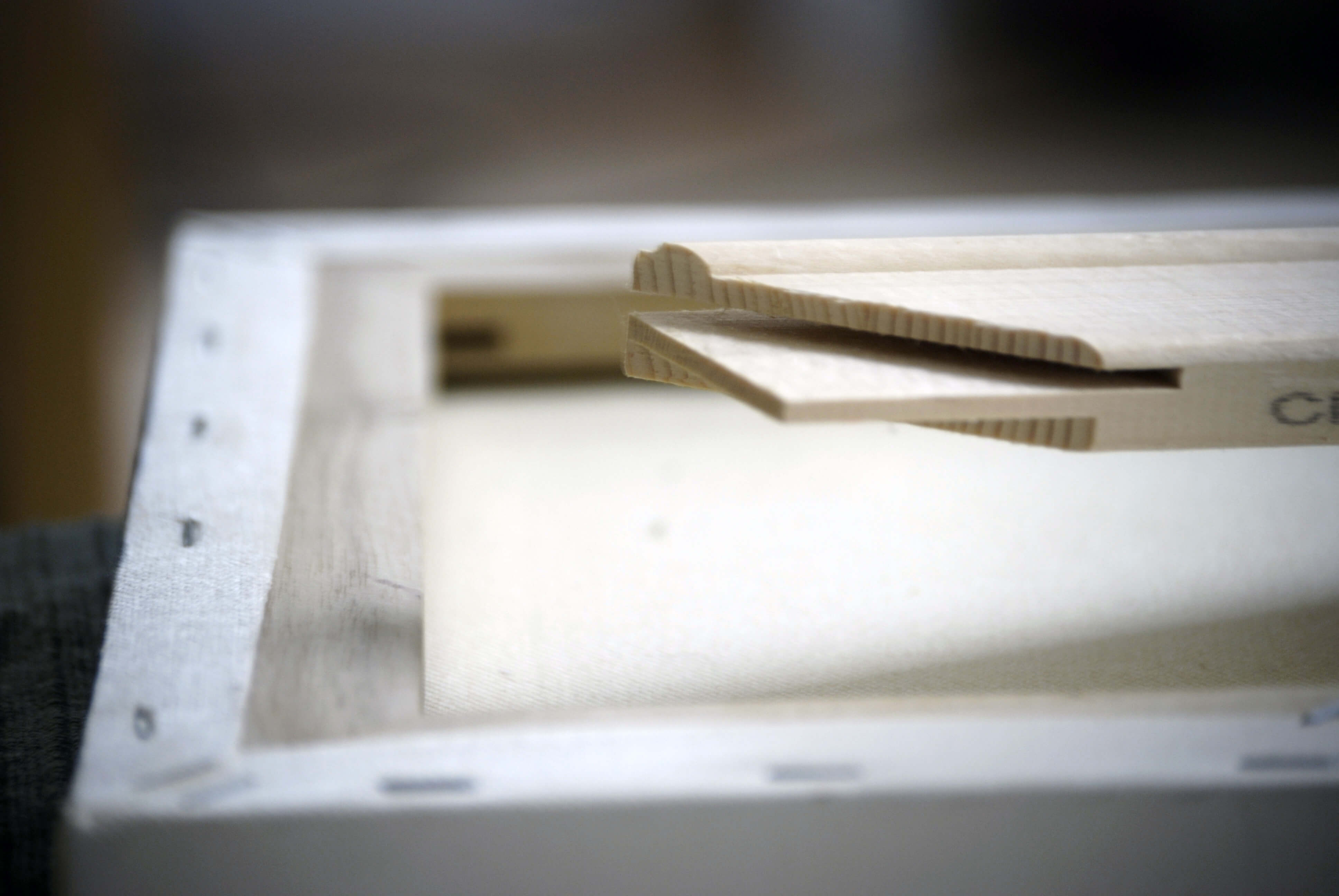
The stretcher is the structural wooden frame inside a canvas picture, not the decorative frame around it. Its corner joints fit together and can accommodate wooden keys. This differs from a rigid strainer with fixed corners. Neither construction should be chosen solely because its dimensions happen to match the picture.
The bar profile, depth and any additional cross support need to suit the canvas and its format. A large painting places different demands on the support from a small work. The amount of usable fabric also matters: it has to travel around the sides and still provide enough material for secure attachment. A deeper profile uses more of the available margin.
Canvas prints need a planned image area and stretching margin
A photograph or reproduction printed on suitable canvas can be mounted on a stretcher frame. Not every print is made for this treatment. A paper print, for example, should not be treated like a textile canvas; depending on the work, picture framing or an appropriate mounting method may be the better route.
Before stretching a printed canvas, we discuss which part of the image should face the viewer. If the picture continues around the sides, those areas will no longer be fully visible from the front. A signature, a face or lettering near an edge can therefore affect the choice of frame and crop. An unprinted margin or a deliberately extended image border can provide room for attachment, provided it suits the support.
If you are about to order a canvas print, it is worth agreeing the intended image size and edge allowance first. For an existing print, bring the complete canvas rather than just its image measurements. Our page on canvas pictures offers further ideas if you are still choosing the work itself.
Rolled canvases and pictures already on a frame
A picture brought back from abroad does not automatically have to be cropped to a standard size. We first look at the composition and the usable edges. Old folds, fixing holes and closely trimmed margins can limit the options. If a previous stretcher is available, its condition and fit determine whether it is worth retaining.
Both wood and canvas respond to changes in their surroundings. A slack area does not necessarily mean that the entire frame needs replacing, but not every distortion can be corrected by increasing tension either. The photographs of wooden keys illustrate how a stretcher is constructed. They are not general instructions for tightening a finished painting at home.
Visible canvas edges or a float frame?
Once the structural support has been considered, you can decide how the picture should sit on the wall. Without an outer frame, its corners and sides become more noticeable. A float frame creates a deliberate gap around the stretched canvas, separating the image from the surrounding profile rather than overlapping its front edge.
Oil paintings and canvas prints can both benefit from comparing frame samples with the actual image. A dark profile draws attention to the outline; a quieter wood tone may relate to the furnishings without competing with the picture. Depth, colour and the width of the gap should work together. We can discuss an outer frame as part of your visit, alongside the stretching itself.
What to include when asking about canvas stretching
Photographs of the front, back and edges help us prepare for a consultation. Please give the visible image dimensions and, for an unstretched work, the overall canvas dimensions too. Add close-up photographs of any damage without pressing on or touching the image surface.
- Is the work an oil painting, an acrylic painting or a print on canvas?
- Is it rolled, loose or already attached to a wooden frame?
- How much fabric remains around the image, and are there tears or old folds?
- Would you prefer exposed canvas edges or an additional float frame?
The work involved depends on size, condition, material and the finish you choose. Photos are useful for an initial discussion, but a firm assessment may require examining the original. That allows us to distinguish straightforward stretching from cases that need attention to the canvas or paint before framing can proceed.
Questions about canvas stretching
Can you stretch a painting or canvas print I bought elsewhere?
Yes. You are welcome to ask about a canvas you already own, including a rolled painting brought back from a trip. Its material and condition determine what is possible. Please tell us whether it is painted or printed and whether it has previously been attached to a frame.
How much spare canvas is needed around the image?
The allowance depends on the stretcher depth and the attachment method. The fabric must cover the sides and leave enough material to secure it. Keep all existing margins intact. Before ordering a new print, agree the intended image area and stretching allowance rather than relying on a single standard measurement.
Should I tighten the keys if my oil painting looks loose?
Not without an assessment. The cause of the slackness and the condition of the canvas and paint need to be understood first. Extra tension can damage brittle or lifting paint. Leave the keys as they are and send photographs or arrange to have the painting examined.
Does a stretched canvas still need an outer frame?
A decorative outer frame is optional. The appearance of the edges, your preferred presentation and a suitable hanging arrangement guide the choice. A float frame surrounds the canvas with a gap, while an unframed presentation leaves its sides and corners clearly visible.
Ready to take your canvas out of the tube?
Tell us about your oil painting or canvas print. At Kaiserdamm 5 we can examine the work and discuss its support, edges and framing together. Send photographs and measurements ahead of your visit so we can prepare for the questions that matter to your picture.
Ask about stretching your canvas