
Discover original etchings online and in Berlin
Fine lines, expressive plate tone and the impression left on paper give an etching its distinctive presence. Explore city views, landscapes, plants, animals and many other subjects in the specialist online shop.
View original etchings online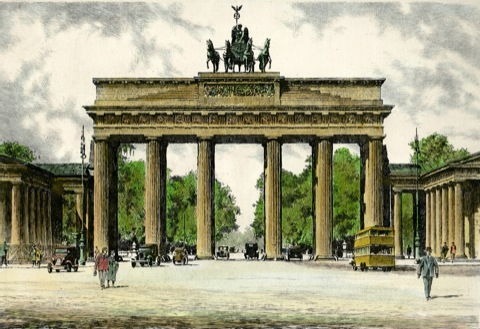
What makes an original etching distinctive
Etching is an intaglio process. Rather than reproducing an existing image, an original etching is conceived for printing from a worked metal plate. The artist draws through an acid-resistant ground, allowing acid to bite recessed lines that will later hold the ink.
For each impression, ink is worked into the plate and carefully wiped from the surface. Damp paper is placed over it and passed through a press under considerable pressure. The paper takes up the image in reverse and may retain a visible indentation around the edge of the plate. Small variations in inking and wiping can give individual impressions a particular character. Berliner Bilder Galerie at Kaiserdamm connects this demanding craft with personal advice about graphic art.
Etching, drypoint and aquatint
Several related methods contribute to the visual language of etchings. Acid creates a traditional etched line, which can remain light and spontaneous or build into dense cross-hatching. With drypoint, a sharp tool is drawn directly through the plate; the displaced metal can retain ink and produce a softer edge.
Aquatint brings areas of tone into the intaglio image. It enables gradual dark and light passages that may recall an ink wash rather than a drawing made only from lines. Artists often combine processes on the same plate, so it is more useful to study line, tone and surface together than to force every impression into a single narrow category. Our introduction to original prints and printmaking techniques places etching alongside lithography, screen printing and other forms of graphic art.
Reading signatures, numbers and editions
Many modern etchings carry a pencil signature and a fraction beneath the image. In an edition marked 12/100, the first number normally identifies that particular impression and the second describes the regular edition size. Artist proofs, trial proofs and different states of a plate may also exist. Older works do not necessarily follow modern habits of signing and numbering.
An edition number alone is not proof of authenticity, value or condition. The printing method, paper, signature and known history should make sense as a whole. Check for trimming, a visible plate mark and traces of earlier mounting. Examining the sheet usually reveals more than a photograph.
Choosing a subject for your space
Etchings cover a remarkably wide range of subjects. Detailed city views preserve architecture and can recall a meaningful place. Landscapes, flowers and animals may appear calm, narrative or highly decorative depending on the artist’s line. Zodiac signs and symbolic images can make personal gifts. Abstract and contemporary printmakers use the same interaction of incised line, tone and paper in very different ways.
The relationship between printed area, sheet size and mount determines how strongly an etching occupies the wall. A small work can hold attention alone, while a carefully spaced group can animate a larger area. The artist and graphic-art directory provides further routes into individual styles.
Looking at condition and print quality
Works on paper deserve to be viewed as complete sheets. Discolouration, foxing, creases, tears, adhesive residue or margins cut very close to the image may affect both appearance and condition. Printed lines and tonal passages should be judged in relation to the work: a forceful impression is not automatically superior to a delicate one. Plate tone and uneven wiping can be deliberate parts of the composition.
Useful information includes the technique, dimensions and reliable details about the artist and edition. For a framed work, ask which mounting materials were used. A personal viewing helps when paper colour or subtle condition points are difficult to assess on screen.
Framing an etching with care
Paper responds to light, moisture and unsuitable materials. The sheet should not rest directly against the glazing. A window mount or another spacer creates a safer gap and can organise the margins without physically trimming them. Mounting should be reversible wherever possible. Direct sunlight, high humidity and positions close to radiators are poor choices for long-term display.
With bespoke framing for original etchings in Berlin, the frame, mount, glazing and overall proportions can be considered together. In bright rooms, special-purpose picture glass for works on paper can reduce distracting reflections and make fine lines easier to enjoy. The aim is a presentation in which the print remains visually clear and the materials support its character.
Frequently asked questions
How can you recognise an original etching?
Common clues include a plate mark impressed into the paper, slightly raised ink in the printed lines and reliable information about the artist, technique and edition. No single feature proves the classification on its own. Paper, printed image, signature, reverse and supporting documents should be considered together.
What does an edition number such as 12/100 mean?
The first number usually identifies the individual impression, while the second gives the size of the regular edition. Artist proofs or trial proofs may exist in addition. Numbering alone does not establish authenticity, quality or the condition of the sheet.
How should an etching be framed?
Conservation-quality materials, reversible mounting and sufficient distance from the glazing are sound starting points. A mount can protect the sheet while giving the image breathing space. The glass, frame profile and colour should suit the paper, printed image, lighting and intended setting.
Which etching will suit you and your space?
Browse for a subject online or visit us at Kaiserdamm 5. Berliner Bilder Galerie can advise you on visual impact, format, condition and a framing solution suited to the work.