
Paintings
Acrylic or Oil Painting?
Drying, surface, colour depth, ageing and care distinguish acrylic painting from oil painting.
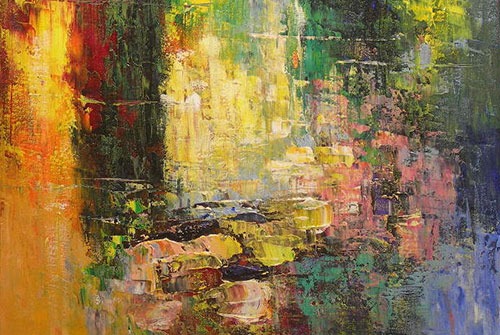
Acrylic and oil are versatile binding systems; their effect depends more on layering and technique than on simple quality rankings. Dividing acrylic and oil by gloss or drying time alone misses much of the way painters actually use them.
When comparing works in the gallery, the actual surface, support and spatial effect matter more than the label attached to the medium. Two works may shine in a similar way while having very different structures. Paintings made with the same binder may be matt, heavily textured, transparent or almost graphic. Selection and care therefore begin with the actual surface.
What acrylic paint can do
Acrylic suspends pigment in a polymer dispersion and dries relatively quickly. It supports rapid overpainting, sharp edges and a wide range of thicknesses. The resulting matt or glossy surfaces can range from very matt to glossy. Additives, varnishes and binder content all change the appearance.
Dry acrylic films may remain comparatively flexible, yet heat, pressure and unsuitable cleaning can still affect them. Dust can settle in soft or textured surfaces. Acrylic and oil paintings presents examples of both media without turning the choice of binder into a quality ranking.
How oil paint develops
Oil paint dries through oxidation and may continue curing for a long time. It supports glazes and opaque paint layers, soft transitions and pronounced brushwork. Oil is not always glossy; varnish, age and surface preparation may influence sheen more than the original technique.
With thick paint, older canvas or brittle areas, flexibility of the support becomes important. Pressure from the reverse, loose keys and strong environmental change can contribute to damage. A photograph alone cannot classify every technique or establish condition safely.
Four observations to make at the painting
- Matt or glossy surfaces. View sheen, brushwork and paint thickness frontally and in raking light.
- Glazes and opaque paint layers. Study transitions, glazes and raised areas without identifying the binder from one clue.
- Flexibility of the support. Check canvas, stretcher, edges and reverse for tension or visible change.
- Sensitivity to pressure, heat and cleaning. Coordinate light, frame and location with the actual paint surface.
View the painting both frontally and in raking light. Raised paint, matt patches, varnish gloss and support texture become easier to read. Smelling, rubbing and scratching are not useful tests. Even a small hidden area should not be wet-cleaned without understanding the material.
Paintings of the gallery allows different paintings and surfaces to be compared. The relevant question is not which medium is supposedly more prestigious, but which image, scale and material presence you want to live with.
Light and spatial effect
The intended light matters for matt or glossy surfaces. Strong side light emphasises texture but can also produce restless highlights. Dark glazes need sufficient illumination, while direct sun and strong heat are poor choices for both media.
Picture framing in Berlin may protect a canvas and refine its position in the room. A tray frame keeps visual space around the edge, while a traditional profile has a stronger presence. Rebate depth and fixing must not touch paint or strain the canvas unevenly.
Three assumptions to avoid
- Assuming acrylic is inherently less valuable.
- Calling every glossy painting oil.
- Wet-cleaning a surface without professional assessment.
Cleaning should never become part of a routine household wipe-down. Water, alcohol and detergents can alter matt acrylic, varnish or sensitive paint. Loose particles and tacky deposits need assessment before any treatment is chosen.
Personal advice on Kaiserdamm
Bring overall images, raking-light photographs, dimensions and pictures of the reverse. Personal advice provides the contact for asking whether the original should be examined for framing or condition. The stretcher, edges and reverse often reveal more about construction and earlier treatment than the front alone.
Canvas Art or a Framed Print? compares the spatial effect of canvas and framed graphic art. It is a useful next step when medium, format, wall depth and presentation are all part of the decision.
Gloss does not identify the binder reliably
A glossy surface may come from varnish on an oil painting, from acrylic medium or from a later coating. Both techniques can also be deliberately matt. Judging the medium from sheen alone ignores ground, layering and later treatment. Raking light reveals raised paint and changes across the surface, but it is not a complete material analysis.
For everyday care, sensitivity matters more than any supposed hierarchy between the media. Textured acrylic can hold dust and react badly to unsuitable cleaning. An older oil painting may have brittle paint, altered varnish or tension problems in the canvas. Water, household cleaner and pressure are unsafe responses in either case.
The reverse can provide valuable context. Stretcher, fabric, ground and earlier repairs reveal construction and condition without taking a sample. Visual response can still lead the choice: understanding the material helps with care and framing, but it does not decide which image you will continue to enjoy.
When a surface change seems unusual, document it instead of testing a cleaner. Photograph the same area frontally and in raking light so that gloss differences, cracks or lifting paint can be described accurately during a later consultation. Do not press, wet or rub a supposedly inconspicuous corner to identify the material.
Conclusion
Acrylic and oil both offer enormous range. Matt or glossy surfaces, glazes and opaque paint layers, flexibility of the support and sensitivity to pressure, heat and cleaning need to be read on the individual painting. Good selection avoids material hierarchies, while good care avoids cleaning experiments and respects surface, support and condition.
Frequently asked questions
Can gloss reliably distinguish acrylic from oil?
No. Varnish, matting agents, layer thickness and age all alter gloss, so distant visual identification remains uncertain.
Which paint dries faster?
Acrylic paint typically dries much faster. Oil paint cures over a longer period depending on pigment, layer and binder.
Can a painting be wiped with a damp cloth?
That is risky without understanding paint, varnish and condition. Dust and deposits need an appropriate assessment first.
Would you like personal advice in Berlin?
Bring your questions, room situation or artwork to Berliner Bilder Galerie. We will help you compare suitable options for art, framing and presentation.