
Art objects
Art Objects: Buddy Bears, Flossis and Sculptures
Form, material, colour and position determine how art objects work between collection, sculpture and interior accent.
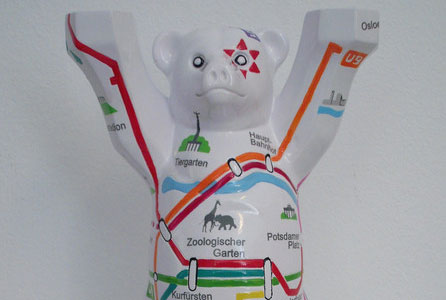
Art objects are viewed from several sides and need not only a surface, but space, light and a secure visual route around them. Buddy Bears, Flossis and small sculptures change as the viewer moves around them. Outline, painted sides and reverse therefore belong to the selection.
Buddy Bears, Flossis and other figures can be compared at BBG by size, colour, location and gift context. Do not judge scale and colour on a screen alone. The relevant questions are how the figure looks from normal eye level, how securely it stands and whether the room leaves enough quiet space around its silhouette.
View a figure from more than one side
Examine views from more than one side on the actual object. Walk around it slowly and check whether paint, gesture and outline remain legible from the important directions in the room. What appears to be a reverse may be permanently visible from the entrance or sofa.
Berlin Buddy Bears presents different Berlin motifs and sizes. For a particular figure, look for views from several sides, dimensions and material information. One frontal product image cannot communicate the complete spatial effect.
Consider material and finish
Within material and surface sensitivity, lacquered, painted and textured finishes behave differently. Glossy figures reflect windows and lamps, while matt surfaces may show dust more readily. Rubbing, aggressive cleaners and repeated handling are not suitable forms of care.
Flossis by Rosalie presents colourful figures with particularly active silhouettes. They need clear surrounding space. Crowded shelving makes the forms feel heavy, while a calm plinth or dedicated wall shelf allows the outline to remain legible.
Choose a stable position
- Views from more than one side. Walk around the figure and examine outline, paint and reverse.
- Material and surface sensitivity. Clarify material, care and sensitivity to light and handling.
- Stability and protection from impact. Choose a level surface outside narrow routes and check the complete footprint.
- Colour and scale in relation to the room. Test height and volume with an object of similar size at the intended position.
A secure display begins with a level surface large enough for the base. This directly addresses stability and protection from impact. The object should not sit at an edge or project into a narrow route. In homes with children, pets or frequent visitors, a material-compatible restraint may be sensible. It must not damage the base or finish.
Direct sun can affect colours and materials. Positions beside radiators or exposed to strong temperature changes are poor choices as well. Test the location for several days without permanent adhesive pads. The object can then move until viewpoints and safety genuinely work.
Judge colour and scale in the room
For colour and scale in relation to the room, a flat paper outline gives only part of the information because it cannot show height or volume. Place a box of similar size on the proposed surface and view it from the entrance, seating and side route. This reveals whether the figure disappears or overwhelms the position.
Parastone art objects broadens the comparison to other figures and subjects. Several objects need not stand in a straight line. Varied heights can form a calm group when silhouettes have enough separation and a recurring material or colour provides a link.
Combine objects with pictures
A wall picture and a figure may respond to one another, but they should not compete for the same small area. Repeated colours or a shared Berlin reference can connect them. Clear spacing preserves the outline of each work.
Check that the object does not obscure an important area of a framed picture behind it. Equally, a forceful wall image should not overwhelm a smaller sculpture. Photographs from several viewpoints are more useful than a purely frontal arrangement.
Avoid common placement errors
- Planning a figure only from the front like a picture.
- Letting small objects disappear in busy shelving.
- Underestimating direct sun and frequent touching.
A small object does not automatically need a display case. Where dust, handling or stability is a genuine concern, one may be useful. Its internal dimensions, door movement and reflections must suit the figure. A tight cover can be as visually restless as crowded shelving.
Compare objects on Kaiserdamm
Personal advice provides the details for sharing surface dimensions, room photographs and saved favourites in advance. At the gallery, scale, finish and all-round view can be compared directly. For a gift, subject and size can also be considered in relation to the recipient and future setting.
Choosing Art for a Living Room is a useful next step when figures and pictures will share a living space. It places greater emphasis on sightlines, furniture and light.
Collecting and gifting benefit from clear records
Record the title, size, material and any series or motif information for each figure. Photographs of front, sides and underside make later condition comparison easier. Keep invoices and accompanying documents separately but clearly connected to the object.
For a gift, plan the handover safely. The figure needs packaging that does not press on painted surfaces or projecting parts. A short care note is more useful than allowing the object to pass around a room unprotected throughout the occasion.
If the gift becomes the beginning of a collection, a simple list provides an overview. It prevents accidental duplication, records different sizes and helps decide which pieces should be displayed together or stored safely for a period.
A plinth should be large enough for the complete base and secure against accidental movement. Temporary stools or stacked boxes are not permanent display furniture. A purpose-made support can coordinate colour and height without altering the painted surface of the object.
Inside a display case, the figure needs clearance from glazing and door movement. Check that it can be inserted and removed without contact. Reflections should not restrict the all-round view more than the enclosure helps with dust and handling.
Conclusion
A convincing position connects views from more than one side, material and surface sensitivity, stability and protection from impact and colour and scale in relation to the room. Viewing the figure from several sides, leaving space around it and testing the support produces a display that remains both secure and visually clear.
Frequently asked questions
Where should an art object be placed?
A calm, stable position with several useful viewpoints works well. Circulation routes and direct sun should be considered.
Are Buddy Bears only souvenirs?
The figures combine a Berlin connection, design and collectability. Their effect depends on motif, size and context.
How can figures be combined with pictures?
Repeated colours or themes can create a link. Enough space prevents object and wall art from competing for attention.
Would you like personal advice in Berlin?
Bring your questions, room situation or artwork to Berliner Bilder Galerie. We will help you compare suitable options for art, framing and presentation.