
Printmaking
Etching, Lithography and Screen Printing Compared
Compare three printmaking methods through line, surface, colour, matrix and their characteristic visual effects.
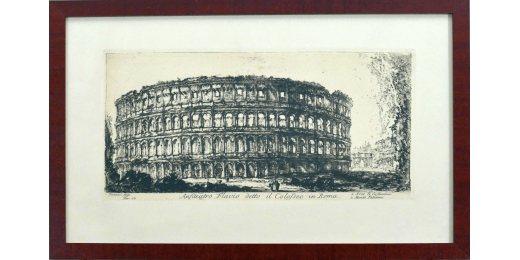
Etching, lithography and screen printing use different matrices, which is why they produce distinct lines, surfaces and layers of colour. When examining intaglio printing from a metal plate, a signature, plate mark or handwritten number may attract attention, but it should not outweigh the sheet itself. Classification becomes convincing when process, paper, printed image and available records agree.
Comparing several sheets in a Berlin gallery reveals differences in surface and image structure that a screen cannot fully reproduce. Examining a print does not require a long specialist vocabulary. Look at the sheet first, then study inscriptions and documents. This order stops an expected label from hiding details that point in another direction.
Read the sheet before the label
Start with line, surface, ink and paper. Intaglio printing from a metal plate often needs close viewing, while planographic printing from stone or plate makes more sense in relation to the image as a whole. Raking light can reveal embossing and deposits that disappear in a flat frontal photograph.
The reverse and margins also matter. They may carry inscriptions, old hinges, watermarks or evidence of an earlier mount. None proves authenticity on its own. Ask instead whether they contribute to an understanding of the overlap of separate colour passes. Explore original prints places these observations within the main printmaking processes.
Four points to examine together
- Intaglio printing from a metal plate. Examine the feature on the sheet and, where possible, in raking light; frontal photographs can hide fine printing evidence.
- Planographic printing from stone or plate. Compare line, paper and process before assigning the work from one isolated detail.
- Stencil printing through a screen. Read numbers and abbreviations in the context of the edition, technique and available records.
- The overlap of separate colour passes. Include margins and reverse, because framing can conceal useful evidence there.
The four points do not have to form a perfectly tidy story. With stencil printing through a screen, a discrepancy may be the most useful finding. If a notation conflicts with paper or process, the description deserves another look. A faint feature is not disqualifying when trimming or a window mount conceals part of the sheet.
View original etchings is useful when comparing processes. Etching, lithography and screen printing leave different traces. Pay particular attention to intaglio printing from a metal plate. Paper, printing state and artistic method can still create wide variation within one category.
Understand signatures and editions in context
A pencil signature can be part of a print’s documentation, but it cannot replace technical examination. The same applies to edition fractions, artist’s proofs and trial proofs. When considering stencil printing through a screen, distinguish what is visible on the sheet from the accompanying description. The two should not contradict one another.
Catalogues, invoices, publisher information and gallery labels can clarify the overlap of separate colour passes. Record visible observations on the sheet separately from those documents. A gallery can discuss the overlap of separate colour passes and suitable presentation without turning every conversation into formal authentication.
Common mistakes during examination
- Calling every bold colour area a screenprint.
- Confusing lithography with modern digital printing.
- Identifying a process only from a distant framed view.
Removing a work from its frame without a clean, prepared support is a separate risk. Paper may adhere to old hinges, sit under tension or have weakened edges. Whether opening is necessary depends on the question around stencil printing through a screen. Photograph front, reverse and details first.
Framing is part of the print’s future
Artists and graphic art explains how intaglio printing from a metal plate can remain visible without covering evidence or attaching the sheet permanently. The frame should still allow the overlap of separate colour passes to be examined later. To protect the overlap of separate colour passes, conservation-quality mount board, separation from glazing and stable backing matter more than fashion.
Light protection does not mean hiding a print. To preserve the readability of planographic printing from stone or plate, avoid direct sun and choose glazing for the work and room. Even with UV filtering, exposure affecting planographic printing from stone or plate remains cumulative, while questions of classification still belong in the object description.
Discuss the actual work
If your main question concerns stencil printing through a screen, bring overall photographs, details, measurements and any records to a consultation on Kaiserdamm. See Picture framing in Berlin for further artist pages or contact details. Paper, embossing, ink and an existing frame can be judged more accurately in person.
How to Identify an Etching develops a closely connected printmaking question. It also helps describe the overlap of separate colour passes honestly rather than assigning a label too quickly.
Three processes build an image in different ways
Etching carries the line in recessed marks on a metal plate. Lithography prints from a flat matrix and can retain grainy, crayon-like transitions. Screen printing pushes colour through open areas of a mesh, often creating distinct layers and opaque shapes. These are working principles rather than rigid visual formulas. Bright colour does not prove screen printing, and a rectangular border does not by itself establish an intaglio process.
Transitions between colours can be especially revealing. Screenprinted layers may overlap with a clear edge, while colour lithography can produce softer modulation. Etching may combine line with aquatint or plate tone. The original sheet communicates these differences far better than a screen because relief, ink deposit and paper surface are not flattened into a single digital image.
Conclusion
The most reliable reading begins with the sheet. Intaglio printing from a metal plate, planographic printing from stone or plate, stencil printing through a screen and the overlap of separate colour passes can form a coherent assessment even when one question remains open. Judge observation, documentation and framing separately before bringing them together.
Frequently asked questions
Which method produces the finest lines?
Etching can create very fine, mobile lines, but the final effect also depends on the plate, bite, ink, paper and the artist’s approach.
Are screenprints always brightly coloured?
No. Screen printing suits clear colour fields, yet artists also use it for restrained, monochrome or transparent layers.
Can the process be identified through glazing?
Some clues remain visible, but reflections and viewing distance limit inspection. A reliable assessment often requires a closer look at the sheet.
Related guides
Would you like personal advice in Berlin?
Bring your questions, room situation or artwork to Berliner Bilder Galerie. We will help you compare suitable options for art, framing and presentation.