
Buying art
Buying Framed Art: Questions About the Picture and Frame
Check what a framed artwork listing includes, distinguish image and outer dimensions, and clarify condition or planned alterations before buying.
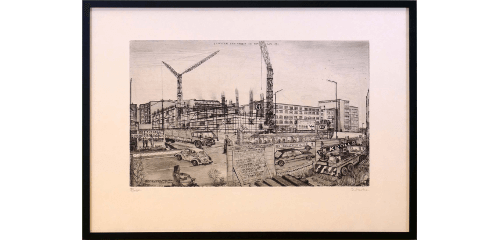
You find a print you immediately like. It is already framed, the photograph looks complete and you can imagine it on your wall. Before agreeing to buy it, pause over the description. The artwork, its frame and the seller’s information need to refer to the same object. Establish what is included, which dimensions are given and what is actually known about the existing presentation. A pleasing photograph cannot answer those questions on its own.
A framed work is not necessarily more complicated to buy. A suitable surround may be part of its appeal and save a later decision. It can also conceal an edge you wanted to see or occupy considerably more wall space than the image suggests. The aim is to understand the purchase, not to treat every older frame as a defect. A few well-directed questions make the difference between an assumption and an informed choice.
Separate your response to the art from the surround
Look at the subject before deciding how much the frame contributes. Would this image still interest you with a quieter presentation? A broad decorative surround can make a small work feel important; a narrow dark edge may give it a very different emphasis. Neither establishes the artist, process or quality of the work. Those details need their own evidence and should describe the particular object being offered.
For an online listing, ask for an overall view and clear details rather than relying on one attractive crop. An image may omit a sheet edge, inscription or visible change near a corner. Where an edition is involved, information about another impression is not automatically information about this one. Our guide to buying your first artwork covers the broader selection. Here the additional question is whether the existing frame supports the purchase you have in mind.
Establish exactly what is included
A photograph showing a frame may illustrate a suggested presentation rather than the item supplied. Another listing may offer the exact framed object in the picture. Ask the seller to make this clear if the description does not. It is also worth establishing whether photographs show the actual piece or a comparable example. These are straightforward questions, but resolving them early prevents disappointment after collection or delivery.
Keep the answers with the listing. Ask what is known about glazing, mounting and backing without assuming that missing records prove a problem. Older framing may not come with a complete material specification. An honest statement that the construction is unknown is more useful than an unsupported promise of protection. Any proposed changes can then be discussed in light of what remains to be examined. A buyer’s visual check is not a substitute for a professional assessment of the assembly.
Describe what you can see without dismantling anything
Consider the complete front, the corners and the visible edges around the artwork. Is a moulding visibly damaged? Does the opening cover part of an inscription? Are there marks on the glass or surround that you would like explained? Describe the observation rather than assigning a cause. A photograph does not reliably establish why an area has changed colour or whether a joint remains structurally sound. Ask about known changes and available condition information.
Do not open an unfamiliar or fragile framing assembly merely to investigate a prospective purchase. Request records already available and discuss whether further examination is possible. If a specific break is visible, our advice on damaged picture frames provides a starting point. A broken corner is not simply a cosmetic matter. Safe handling has to be considered before attention turns to how the object will look in your room.
Check the size of what will actually hang on the wall
The outside of the frame determines the wall space required, not just the subject within it. Ask for the complete outer width and height. If the description gives only one set of numbers, establish whether these refer to the sheet, the visible image or the framed object. Note units and orientation. A wide mount can create a substantial difference between the printed area and the overall size, even where the frame moulding itself is narrow.
Make a simple sketch of the intended location, including neighbouring furniture and pictures. A work may fit between two edges yet remain uncomfortable to look at there. The specialist explanation of picture, visible and outer dimensions, in German goes into the terminology. At the buying stage, the immediate task is to connect every number with the part it describes, not to calculate construction dimensions from a photograph.
Frame age and artwork age are different questions
A painting and its surround may have been brought together long after either was made. Decoration that appears old does not establish the age of a print. Equally, a recent plain moulding does not make an old painting recent. If the history of the pairing matters to you, ask for documentation or a clear explanation of what is known. A suggestion based on appearance should remain a suggestion rather than becoming a statement of provenance.
Where a frame is documented as belonging with the work, that relationship deserves consideration before a change is planned. Replacing it solely to match furniture may not be the right starting point. With a later presentation frame, other questions may take priority. A framing consultation helps identify what needs checking. Outer dimensions and a listing image alone cannot establish that an existing frame can safely be reused or adapted.
Keep a short list of unanswered questions
A compact note is often more useful than a folder of screenshots with no explanation. Separate what the description establishes from what you still want to ask. The checklist below is a conversation aid, not an authenticity assessment or a technical inspection. You need not resolve every specialist question yourself, but you should know which uncertainty could affect your decision.
- Is the particular artwork supplied with the exact frame shown?
- What information supports the stated artist, process and, where relevant, edition?
- Are the outer frame dimensions clearly distinguished from image or sheet dimensions?
- Which visible changes are explained, and which still need assessment?
- Do you want to retain the presentation or make a specific alteration?
- How will collection or transport be agreed before the object is moved?
Buy with a realistic idea of the next step
If a later alteration is essential to your choice, discuss its feasibility before committing to the purchase. Do not assume that a different mount, replacement glass or new surround will automatically solve an unresolved issue. Nor should a modest mark on a frame outweigh everything you like about an artwork without understanding its significance. The useful distinction is between an acceptable feature, an open question and a change on which your decision depends.
Through Berliner Bilder Galerie in Berlin, you can discuss photographs and the information already available. At Kaiserdamm 5, art selection and presentation can be considered together. Keep the reason for wanting the work at the centre of the conversation. Clear information about its frame and size then supports that choice, allowing you to plan the next step without relying on a favourable guess.
Frequently asked questions
Is the frame in a listing photograph always included?
Not necessarily. The photograph may show a suggested presentation. Ask the seller to confirm the particular artwork and frame included in the offer.
Does an old frame prove that the picture is old?
No. A frame and its contents may have been paired later. The age of the artwork needs evidence independent of the appearance of its surround.
Can the frame be reused after purchase?
That depends on condition, construction and the artwork to be accommodated. If your decision relies on a specific alteration, discuss feasibility before committing.
Related guides
Clarify the frame before deciding on the artwork
Share the description, photographs and your intended display. We can help identify unanswered questions about the presentation and discuss what needs examining before an alteration.