
Combining art
Combining Historic Paintings and Modern Art
Bring older paintings and contemporary prints together through subject, proportion and contrast, while respecting the character of each work.
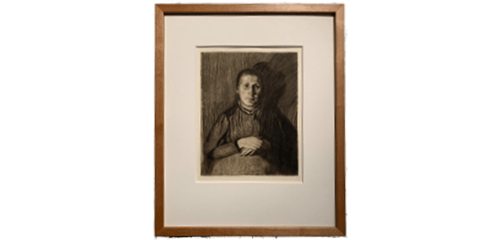
A family portrait has occupied the same wall for years. You bring home a contemporary print and discover that neither picture seems comfortable beside the other. Does one have to go? Usually the more useful question is what you want the two works to say together. Historical paintings and modern art need not share a style. A connection through subject, rhythm or contrast can be more convincing than matching colours and identical frames.
Start with the work that matters most to you. Perhaps it is a face you recognise, a landscape associated with your family or simply a painting you enjoy looking at. Preserve that reason for keeping it. The newer piece should contribute something rather than disguise the older picture as part of a fashionable interior. Equally, a recent print does not have to pretend to be old in order to belong beside it.
Choose a conversation between the pictures
Compare two works before planning an entire wall. What do you notice in each one? A figure looking out of a painting might have an interesting counterpart in a loosely drawn head. A tightly composed interior could sit beside an abstract image with a similarly deliberate structure. These are ways of looking, not claims about influence between artists. You can enjoy a personal association without presenting it as established art history.
Write down one similarity and one difference. This small exercise helps distinguish a connection that holds your interest from an accidental colour match. If nothing comes to mind, try a different companion rather than immediately changing the older frame. Our selection of original graphic art offers different approaches to line, space and subject. It can be useful to compare several techniques before deciding that a particular colour must appear in the new work.
Let visual weight matter as much as dimensions
A small image with sharp contrasts may attract more attention than a much larger, quiet composition. An elaborate frame adds another presence. Judge the complete object, not only the painted or printed area. From across the room, ask which work you notice first. Then move closer and consider whether the quieter picture still rewards attention or has become an accessory to its neighbour.
Photographs labelled with the outer dimensions are helpful for trying arrangements on paper. They cannot reproduce surface, subtle colour or reflections accurately, but they can reveal a poor balance of sizes before any artwork is moved. Change one variable at a time. Try a wider gap, reverse the order or consider separate walls. When every element changes simultaneously, it becomes difficult to explain why one arrangement feels calmer than another.
Different frames can remain different
A historical frame may be important to the character of a painting. A new print can have a much simpler surround without making the pair look unfinished. Unity does not require every frame to be black, gold or equally wide. A relationship in the images themselves may provide enough continuity. Sometimes the distinction between an older object and a recent addition is precisely what makes the grouping engaging.
An ornamental frame is not automatically the original frame, however. Keep any reliable documentation and distinguish it from a family recollection or a visual guess. Avoid altering an older surround merely to make it match a new purchase. In a picture-framing consultation in Berlin, the new piece can be considered in relation to what is already there. This leaves room to improve the overall presentation without making unnecessary changes to the older object.
Three combinations to think through
The following situations are illustrative ideas, not accounts of completed customer projects. They are starting points for looking at your own pictures. None is a formula. Even works with an obvious shared subject may compete when placed too close together, while two apparently unrelated images can become persuasive companions once their proportions and visual pace are considered.
A family portrait beside a spare figure drawing. The subject provides a connection, but the difference in description gives each work its role. A carefully modelled face might gain presence beside a few confident lines. Leave enough separation for the portrait to be seen independently. The intention is not to make the drawing explain the person in the painting, but to allow two approaches to the human figure to coexist.
An older landscape with an abstract print. Look for a horizon, a progression from dark to light or a movement across the composition. The second work need not depict the same scene. It may respond to a spatial idea rather than to trees or buildings. If the only relationship is a green patch that also matches a cushion, consider whether the selection will remain interesting when the furnishings change.
An architectural view and a contemporary city image. Repeated windows, an unusual viewpoint or a strongly directed street can connect the two. One might be intricate and restrained while the other is energetic and colourful. Test whether the smaller details remain worth approaching. If the louder image overwhelms its companion, opposing walls may create a better relationship than a tight pair above the same piece of furniture.
Condition comes before rearranging
Display plans should wait if the painting or frame has a condition problem. Repeatedly moving a fragile work to test positions is not a useful experiment. Begin with photographs already available and arrange advice before handling it further. Our page on historic paintings explains how an enquiry can separate questions about condition from preferences about appearance. It does not assume that an old picture needs a particular treatment.
The chosen location also has to suit the actual materials. A visually attractive wall is not automatically an appropriate place for every work, and a different frame cannot solve all environmental concerns. Mention daylight and how the room is used when discussing the arrangement. If the work has an uncertain history, the specialist article on inherited paintings, in German addresses the earlier question of what should be checked before changes are made.
Make a selection you want to keep looking at
Return to your proposed pairing after a few days. Which connection still interests you? Does each work retain its own identity? A successful arrangement need not be instantly obvious or explain every colour. It should leave both pictures worth looking at separately as well as together. That is a more useful test than whether visitors immediately recognise a coordinated decorating scheme.
For personal art advice at Berliner Bilder Galerie, start with photographs, measurements and a short explanation of what you want to retain. At Kaiserdamm 5 we can discuss possible additions and their presentation. The aim is not to erase differences in age or style. It is to give an existing painting an appropriate setting while allowing a newer work to contribute a distinct voice to your collection.
Frequently asked questions
Do historical and contemporary pictures need matching frames?
No. Individual frames can preserve what makes each work distinctive. A shared visual idea may connect the pictures more convincingly than identical mouldings.
Will a small older picture be lost beside a large modern work?
Not necessarily. Contrast and detail can give a small work a strong presence. Test the relationship from normal viewing distances and consider wider separation if needed.
Should I change an old frame to suit a contemporary room?
Establish its relationship to the artwork and its condition first. Adjusting the newer work or the arrangement may achieve the effect you want without altering the older frame.
Find a companion for a work you already love
Bring photographs of your existing art and possible additions. We can discuss the relationship between the pictures and a presentation that lets each retain its character.