
Picture hanging
Displaying Large and Heavy Pictures Safely
Weight, frame construction, wall, fittings and load distribution need to be planned together for large pictures.
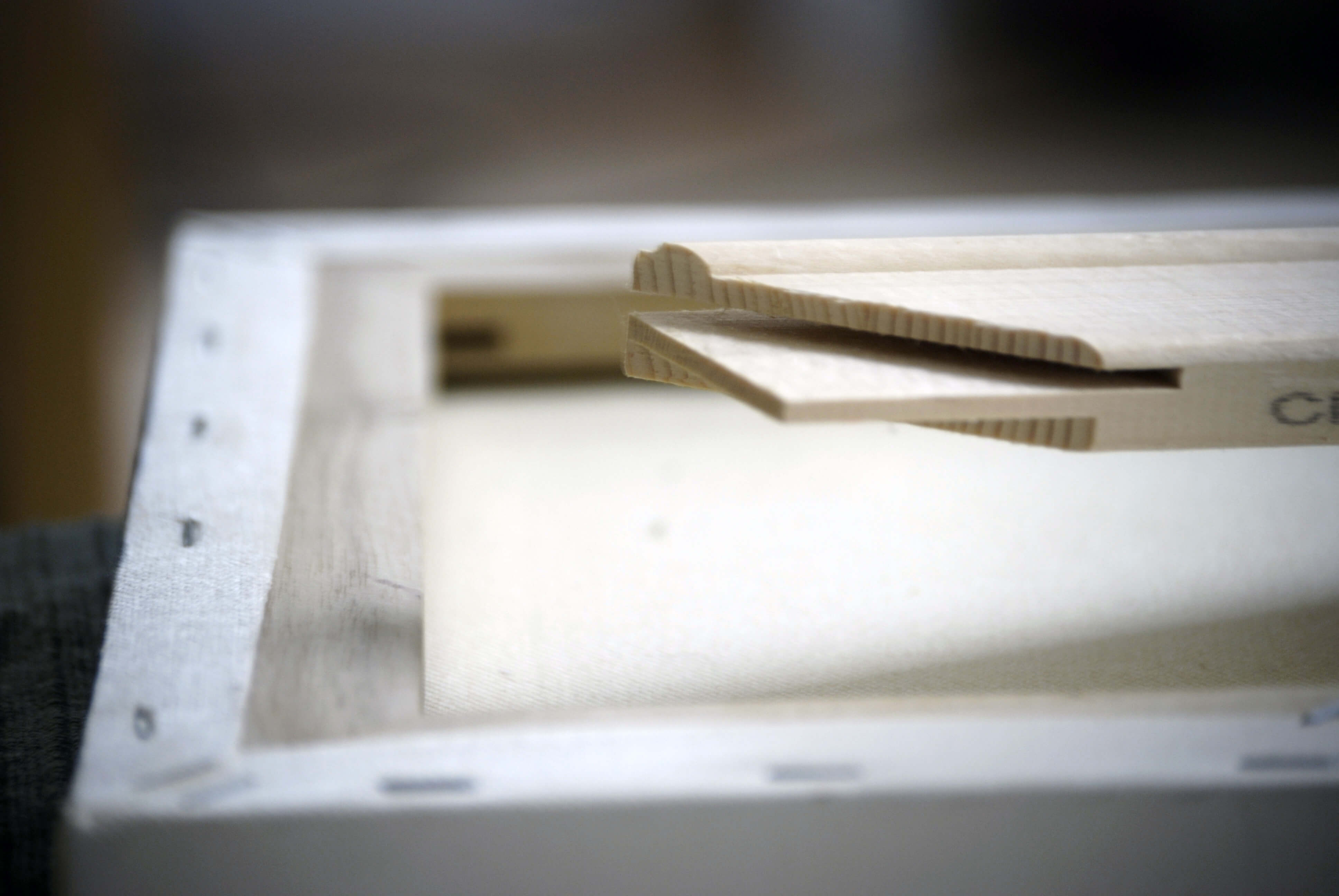
Safe hanging starts with the true total weight and is complete only when wall, fixing and frame attachments have been checked as one chain. Large formats involve more than the weight of the image. Glazing, profile, backing and hardware all contribute to the load transferred through frame and wall.
For large formats in Berlin, a consultation can establish whether the frame, rail system or fixed wall attachment needs adjustment. Record outside dimensions, total weight and existing hanging points at the work. Photographs of the frame reverse and wall make it possible to assess the construction before installation.
Establish the complete weight
Two pictures of similar size may have very different weights. A large glass sheet and solid timber profile change both handling and fixing. Size alone is not a reliable estimate. Weigh the framed work when this can be done safely or have the load established professionally.
Inspect the connections on the frame as well. Old eyes, thin wire or loose corners may fail even after holding a smaller picture for years. If frame, backing or hardware needs attention before hanging, Picture framing in Berlin provides the relevant information.
Four technical facts belong together
- Total weight including glass and frame. Establish the load including glazing, profile, backing and hardware.
- Capacity of the frame attachments. Inspect eyes, rails, wire and corner joints directly on the frame.
- Wall material and suitable anchors. Identify the substrate before selecting plugs and drilling points.
- Redundant or distributed fixing points. Design several fixing points so that they genuinely share the load.
The strongest wall screw cannot compensate for a weak frame connection. A sound frame is equally ineffective when the fixing does not suit the substrate. Artwork, frame, fitting, hook, plug and wall form one load path and must be considered together.
Compare gallery rails explains flexible systems and their limits. A rail is suitable only when its mounting, cables and hooks are rated for the actual total weight. One heavy work may be better served by a directly planned fixing.
Identify wall construction before drilling
Solid masonry, concrete, plasterboard and hollow walls need different fasteners. Unknown construction should be inspected. Services, edge distances and possible cavities are checked before drilling points are marked.
Several fixings can distribute load and resist rotation, but they need to be designed as a group. Two arbitrary hooks do not provide redundancy when only one carries the load or the frame is twisted between them.
Move glazing under control
Large glazed pictures travel upright with enough trained handlers. Hands stay on structural frame sections rather than wire, ornament or backing. Clear the path from landing surface to wall. A prepared padded support allows a safe pause without leaning the work against a hard edge.
For commercial or public interiors, Art for interiors shows how access route, position and installation fit into a wider art scheme. With glazed work, breakage behaviour, cleaning and future removal belong in the decision alongside total weight.
Risks to resolve before installation
- Considering only the weight of the artwork.
- Reusing old frame eyes without inspection.
- Moving large glazed works without a handling plan.
Agree roles before lifting. One person coordinates, another guides the load, and others manage doors or the prepared support. Unplanned changes of direction place unnecessary strain on frame and glass.
Approve position and fixing together
Mark the outside edge with a paper template first. Check height, viewing distance and conflicts with doors or furniture. Only then measure the technical fixing points. This allows the visual position to lead without treating safety as a later correction.
Personal advice provides the contact for sending dimensions, weight and photographs of the frame reverse and wall. Gallery Rail or Traditional Picture Hanging? develops the choice between a rail and a traditional fixing.
Inspection and records still matter after installation
Record the weight, hardware and wall fixing after installation. A photograph of the frame reverse before hanging completes that note. The information is valuable during a later move and prevents a heavy work from being removed without understanding how the load was supported.
Check during the first few days that the picture remains level and both hanging points are sharing the load. Visible movement, a new sound from the profile or a gap opening at a corner are reasons to relieve the hanging and arrange an informed inspection.
Review the position again after changes to the room. New doors, furniture or lighting can narrow the handling route or expose the frame to repeated contact. A fixing remains safer when its surroundings have not changed unnoticed.
When a heavy picture is taken down temporarily, it still needs a prepared padded surface and protection from tipping. The original wall hook is not a suitable place for tools or loose fittings. Label removed hardware and store it so that each component can be assigned correctly during reinstallation.
In rented rooms or on architecturally sensitive wall surfaces, establish which interventions are permitted before planning the display. A heavy work should never depend on an improvised support merely to avoid drilling. If the chosen wall cannot accept a safe fixing, another location is the better technical and visual decision.
Where the picture hangs above furniture, keep enough working space for future removal. A frame that can be installed only by climbing across a fragile cabinet will create the same problem during inspection or an emergency. Safe access belongs to the position from the beginning.
Conclusion
Large and heavy pictures need continuous load planning. Total weight including glass and frame, capacity of the frame attachments, wall material and suitable anchors and redundant or distributed fixing points must agree. A position becomes permanently secure only when frame, fittings, wall and handling have been resolved together.
Frequently asked questions
How can I determine the weight of a framed picture?
Weighing the complete object is most reliable. Estimates based only on size often understate glass, backing and frame profiles.
Is one hook enough?
Load distribution and security are crucial for large or heavy pictures. The correct arrangement depends on both wall and frame.
Can a heavy picture hang from a gallery rail?
Yes, when every component is rated for the load and installed correctly. Manufacturer limits and wall fixing must be compatible.
Related guides
Would you like personal advice in Berlin?
Bring your questions, room situation or artwork to Berliner Bilder Galerie. We will help you compare suitable options for art, framing and presentation.