
Picture framing
Framing Original Prints
Separation from glazing, suitable materials and reversible mounting protect original prints and support their visual effect.
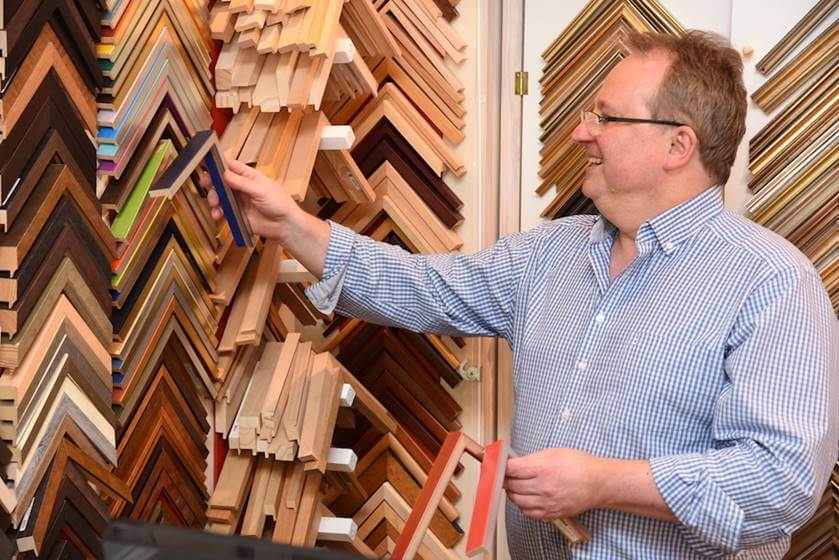
A sound frame keeps the work supported, separates it from the glazing and uses materials appropriate to the individual print. The appropriate solution therefore cannot be chosen from a standard profile or product name alone. Type of work, condition, intended visual effect and location set the order of decisions.
At the BBG workshop on Kaiserdamm, image, paper, condition, glazing and profile are considered together in front of the original. Bring a photograph of the intended wall and approximate dimensions alongside the work when possible. This allows material protection and spatial effect to be discussed together without asking the artwork to imitate the interior.
Start with the object
Begin with paper, printed image and condition. The sheet needs suitable materials and separation from glazing. Old tape, cockling or a sensitive image layer may affect the construction more than a preferred frame profile.
Picture framing in Berlin explains the options for individual framing. With an existing frame, check rebate depth, backing, hanging points and glazing together. An attractive frame is not successful if it traps the sheet or lets glazing touch a sensitive surface.
Four decisions that belong together
- Low-acid mount and backing materials. Compare samples beside the work because paper tone and surface can change the result.
- Space between image surface and glazing. Assess this point together with condition, size and intended location.
- Gentle and preferably reversible attachment. Choose attachment suited to the material and preferably reversible for original work.
- Profile, colour and the visual role of margins. Include glazing, backing, profile and hardware in weight and future handling.
Originals on paper should use suitable attachment that can preferably be undone later. Full-surface mounting alters the sheet permanently and is generally not the right approach for an original print.
Profile, colour and margin determine the visual effect. Choose them after protection and attachment have been resolved. Explore original prints presents further original prints and supports comparison of sizes and paper effects.
Shape space around the image
A window mount separates a sheet from glazing and can preserve a visible margin. Its width should respond to image, paper tone and proportion rather than frame size alone. A float mount may suit a deckled edge when attachment and clearance are planned carefully.
Glossy, matt and textured surfaces react very differently to light. Comparing samples beside the work is more useful than choosing from a catalogue term. Choose specialist picture glass explains how glazing, reflection control and UV filtering can be matched to the image and room.
Common choices worth questioning
- Mounting the whole sheet with adhesive.
- Placing a sensitive surface directly against glass.
- Replacing a historic frame without assessing it.
A technically possible treatment is not automatically suitable. Ask whether it can be reversed and whether every material suits the work. Unknown paints and coatings should not be tested with household cleaners or improvised adhesives.
The reverse matters too
Backing, dust protection and hanging hardware remain mostly out of sight, yet they provide much of the stability. Fixings must suit the total weight without overloading an old frame at one point. Record and retain inscriptions or labels on the reverse where possible.
Personal advice helps connect frame, wall and hanging method. Photographs of doors, radiators, windows and lamps place the work in its intended spatial context.
Make the decision beside the original
Materials and surfaces are judged most reliably in person. Bring existing records and loose parts, but do not remove old mounts without support. Mount board, profile and glazing can be held beside the work on Kaiserdamm and compared at full size.
Museum Glass or Anti-Reflective Picture Glass? develops the choice of glazing. It helps when several options look similar but differ in reflection, protection, weight or cleaning.
Paper needs support without being fixed rigidly
Paper responds to humidity and needs a small degree of movement within the frame. Suitable hinges hold a sheet at limited points instead of bonding the whole reverse to a board. A window mount creates space from the glazing and can reveal a plate mark or paper edge deliberately. The right solution follows condition, size and composition; there is no single decorative mount width that suits every print.
The reverse deserves equal attention. A stable clean backing protects against dust and pressure, while a properly closed frame reduces the entry of dirt. This does not mean sealing the work into an airtight package. The aim is a coordinated construction that can later be opened without damaging the sheet or discarding useful historic components.
Mount width is more than a stylistic choice. It separates the sheet from glazing, gives irregular edges space and can balance unusual proportions. A small image on a large sheet should not automatically be cropped tightly by the window. Part of the surrounding paper may belong to the work’s visual effect and may also carry evidence of the printing process.
Before choosing a profile, decide how the work should be attached. Conservation hinges support a sheet differently from pressure-sensitive tape, and a previous mounting may require assessment before it is disturbed. The safest frame is one whose layers work together: attachment, mount, glazing, backing, sealed edges and hanging hardware.
Conclusion
Good presentation respects the individual object. Low-acid mount and backing materials, space between image surface and glazing, gentle and preferably reversible attachment and profile, colour and the visual role of margins are coordinated rather than ticked off separately. The sheet remains legible, the frame works in the room and no unnecessary permanent intervention is imposed.
Frequently asked questions
Does every original print need a window mount?
No. A window mount is often useful, but spacers or other conservation-minded structures may suit a particular work better.
Why should a print not touch the glazing?
Contact can become problematic with humidity, unstable media or cockled paper. Separation creates a protective space.
Can an old frame be reused?
Yes, when construction, depth, stability and materials are suitable. An assessment shows which adjustments may be needed.
Would you like personal advice in Berlin?
Bring your questions, room situation or artwork to Berliner Bilder Galerie. We will help you compare suitable options for art, framing and presentation.