
Picture glass
Museum Glass or Anti-Reflective Picture Glass?
Reflection control, UV filtering, colour rendering, weight and care distinguish different types of picture glazing.
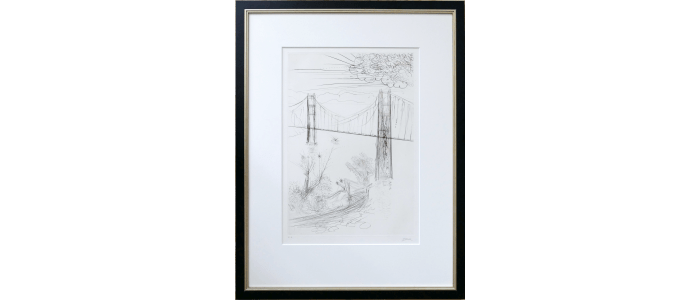
Museum glass commonly combines high transparency, anti-reflective coatings and UV filtering, but individual products still vary. Product names alone are not enough. Image, room light, size, weight and protection need to be compared on the actual work.
A comparison with the original in Berlin shows how blacks, paper whites and fine lines appear behind the glazing. Dark passages, fine lines and paper white reveal residual reflections clearly. Hold a sample in front of the original and view it from normal seated and standing positions.
Matt and optically coated glazing are different
Matt glass scatters light at the surface. It softens hard reflections, but may also soften contours and deep blacks. Optical anti-reflective glazing uses coatings and preserves clearer transmission. Its residual reflection still depends on the angle of the light source.
Choose specialist picture glass explains the main glazing types and their uses. A direct sample comparison matters especially for dark imagery, fine printed lines and textured surfaces.
Compare four properties together
- The type and degree of reflection control. Compare residual reflections from the normal seated and standing positions.
- The stated UV filtering range. Read the technical specification carefully and continue to account for exposure time.
- Colour neutrality and transmission. Check fine lines, paper white and dark passages directly behind a sample.
- Weight, breakage behaviour and cleaning. Include size, frame construction, fixing and future care in the choice.
UV filtering reduces part of the damaging radiation but cannot prevent every light-induced change. Visible light and exposure time continue to matter. A location without direct sun remains necessary even with high-performance glazing.
Picture framing in Berlin explains the complete frame construction. Glazing needs clearance from sensitive image layers, stable backing and hardware capable of carrying the additional weight.
Room light determines visibility
Check the wall in the morning, afternoon and under evening lighting. A window or lamp that seems harmless straight ahead may cover the image from the sofa. A modest change of position can sometimes improve visibility more than changing the glass.
Explore original prints provides original prints for comparison. Test a light and a dark sheet with the same sample because residual reflections and colour rendering appear differently on each.
Weight, breakage and cleaning
Large sheets add considerable weight to a frame. Hardware and frame connections must be designed for it. Breakage behaviour also matters in narrow circulation routes and public interiors.
Clean coated glazing with suitable soft cloths and recommended products. Aggressive cleaners and abrasive materials can create streaks or affect the surface. Ask about care before the picture reaches its final location.
Common assumptions
- Treating every matt surface as optical anti-reflection.
- Comparing brand names instead of technical properties.
- Choosing glazing without the actual image and room light.
A high technical specification is not automatically the right answer for every picture. Protection, visibility, weight, cleaning and budget need a proportionate balance.
Decide beside the original
Personal advice provides the contact for describing the image, dimensions, existing frame and lighting. Framing Original Prints develops the conservation requirements of framing original prints.
Three common situations call for different priorities
With a fine drawing or etching, accurate rendering of paper and line takes priority. Even slight diffusion can soften small detail. Compare a sample directly on the sheet, especially where the image contains dark passages or sits behind a deep window mount.
For a large picture in a public area, weight, breakage behaviour and cleaning become more prominent. The optically strongest pane is useful only when frame, hanging and future handling are designed for its size.
Near direct sun, even high-performance glazing cannot solve the underlying location completely. Moving the picture, using curtains or reducing exposure time may protect it more effectively than selecting a product solely for a higher advertised UV figure.
If a framed work travels regularly or is lent for exhibitions, glazing also has to suit handling. Edge protection, packing and carrying method depend on the material and size of the pane. Notes about the coated side and correct cleaning should travel with the frame.
For a series of related frames, record the exact glazing product. A damaged pane can then be replaced with comparable properties without one picture reflecting visibly differently from the others. Product name, thickness and installation date form a useful practical record.
When the frame returns from transport, inspect the glazing in good light before hanging. Dust inside the package, a shifted spacer or a loose fitting should be resolved on a prepared surface rather than after the picture is back on the wall.
Glazing must not press against a sensitive image surface. A window mount or suitable spacer separates works on paper from the pane. Even in a deep profile, check that artwork, mount, glazing and backing fit the rebate without compression. Optical clarity cannot compensate for an unsuitable frame construction.
Not every picture in a room automatically needs the same premium reflection control. Prioritise works viewed frequently, images with dark passages and positions exposed to difficult reflections. In calm light, a simpler glazing may be sufficient. Direct comparison prevents the product name from making the decision alone.
Review the final combination as a complete corner sample beside the work, with glazing, mount and profile together rather than as unrelated material swatches.
Conclusion
Suitable glazing brings together the type and degree of reflection control, the stated UV filtering range, colour neutrality and transmission and weight, breakage behaviour and cleaning. A comparison at the original reveals more than a product name about visibility, protection and safe handling.
Frequently asked questions
Is museum glass completely invisible?
It can reduce reflections substantially, but remains a physical material. Light sources, viewing angle and cleanliness affect perception.
Does UV-filtering glass prevent all fading?
No. It reduces one part of the exposure. Visible light and duration still affect sensitive materials.
Is premium glazing worthwhile for every picture?
That depends on the work, location, reflections and protection needs. A direct comparison supports a proportionate choice.
Would you like personal advice in Berlin?
Bring your questions, room situation or artwork to Berliner Bilder Galerie. We will help you compare suitable options for art, framing and presentation.