
Protecting art
Light, Reflections and Art Placement
Daylight, lamps, viewing angles and glazing determine both the visibility and exposure of an artwork.
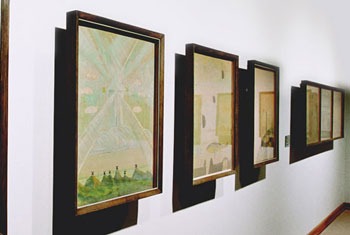
A good position makes the work easy to see without exposing it unnecessarily to direct sun, heat or distracting reflections. Visibility is not determined by brightness alone. Windows, lamps, glazing and viewing direction form a changing geometry throughout the day.
In Berlin apartments with large windows, observe the intended wall at several times of day before fixing a permanent position. Check the intended wall in the morning, around midday and in the evening. Photograph direct sun and reflections from the places where people actually sit or stand.
Observe light over a complete day
A short visit can be misleading. A calm wall in the morning may receive direct sun later in the afternoon. Record time, duration and direction. Sensitive work on paper should not hang where a bright patch travels across it every day.
Choose specialist picture glass explains protection and presentation for sensitive work. UV-filtering materials reduce part of the exposure, but they cannot prevent every change caused by visible light and long display hours.
Four observations at the intended location
- The movement of daylight through the day. Observe direct sun at several times of day and through seasonal change.
- Position and beam angle of lamps. Check windows and lamps for reflections from normal viewing positions.
- Normal viewpoints in the room. Match intensity and duration to the material and its sensitivity.
- Sensitivity of paper, colour and surface. Compare glazing and picture position on the actual image in the real room.
A reflection appears when a light source meets the viewer at the relevant angle. A modest change in height or sideways position may improve visibility. Check several normal viewpoints rather than only standing directly in front of the work.
Picture framing in Berlin helps compare glazing on the actual image. Dark passages reveal residual reflections more readily than light paper. A sample beside the original is more informative than a product name.
Match lamps to the work
A picture light should cover the surface evenly without creating a bright patch or excessive heat. A steep angle may reflect in glazing; low side light emphasises every irregularity. Test a lamp provisionally and view it from seated and standing height.
Art for interiors shows options for rooms containing several works. Group lighting does not need to make every picture equally bright, but it should avoid random jumps or leaving one sensitive sheet under stronger exposure.
Common assumptions to question
- Checking the wall only in evening light.
- Treating UV filtering as complete light protection.
- Judging anti-reflective glazing without real viewing angles.
Anti-reflective glazing improves visibility but cannot replace a suitable location. UV filtering does not make direct sun harmless either. Protection comes from moderate light, limited duration, suitable glazing and periodic inspection.
Record the test
Photograph the work from normal viewpoints in daylight and artificial light. Record a troublesome reflection as well. These images make it possible to adjust position, lamp or glazing deliberately rather than replacing several components on suspicion.
Personal advice provides the contact for describing the image, dimensions, existing glazing and room. Museum Glass or Anti-Reflective Picture Glass? develops the choice between museum glass and other anti-reflective options.
Lighting should follow the way the room is used
Art in a living room may be viewed most closely in the evening, while a reception area is illuminated for many hours during the day. Lighting should follow that real pattern of use. A separately controlled, dimmable picture light can adapt to different situations without exposing the work to maximum output continuously.
Consider the balance with ambient light. One intense pool can feel harsh and make the surrounding room appear unnecessarily dark. Several moderate sources often produce a calmer view and prevent the picture from looking like an isolated display window.
Review the position after seasonal changes. Low winter sun reaches different walls from summer light. Curtains, furniture and newly installed lamps can alter the situation even when the picture itself has not moved.
Label controls or lighting scenes so that the suitable setting is actually used in daily life. A technically good arrangement is of little value when it can be reached only through a complicated sequence. Simple operation belongs to a solution that will continue to work.
A picture light added later should not rest on the frame or route cables over sharp profile edges. Check that fitting, driver and controls remain accessible without moving the artwork each time. Maintenance and lamp replacement belong in the spacing plan.
Record the chosen angle and level once the arrangement is complete. If a fitting is replaced or moved later, the calm starting point can be restored more easily. This is especially useful in offices, hotels and rooms managed by several people.
Where temporary exhibitions change, keep the lighting plan with the hanging record. A new work may need a different angle or lower exposure, even when it occupies the same hook. The previous setting is a reference, not an automatic standard for every material.
Unglazed canvas and paintings avoid reflections from glass, but light can emphasise varnish, gloss differences and raised paint very strongly. Side lighting may enliven texture or make every irregularity dominate. Judge the result from the normal viewing distance rather than only close to the surface.
Several works on one wall do not need identical brightness. Aim for a coherent rhythm without one overlit surface. A sensitive paper work should not receive stronger exposure simply because the neighbouring painting tolerates more light.
Conclusion
Good visibility and preventive care connect the movement of daylight through the day, position and beam angle of lamps, normal viewpoints in the room and sensitivity of paper, colour and surface. Observe the real room at several times of day before deciding on position, lamp and glazing.
Frequently asked questions
Is indirect daylight always harmless?
No. Indirect light still adds to cumulative exposure. Intensity, duration and the sensitivity of the work all matter.
Does museum glass remove every reflection?
High-quality anti-reflective glazing reduces reflections substantially, but cannot neutralise every light source or extreme angle.
How can I test a position before hanging?
Observe the wall and viewpoints in morning, midday and evening light. A temporary placement reveals reflections more realistically.
Related guides
Would you like personal advice in Berlin?
Bring your questions, room situation or artwork to Berliner Bilder Galerie. We will help you compare suitable options for art, framing and presentation.