
Original prints
Original Print or Art Print: What Is the Difference?
A practical guide to processes, editions, signatures and paper when comparing an original print with a reproduction.
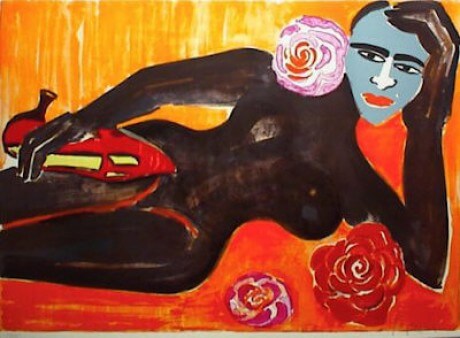
An original print is conceived through a printmaking process, whereas an art print usually reproduces an image that already exists in another form. When examining the printing method and matrix, a signature, plate mark or handwritten number may attract attention, but it should not outweigh the sheet itself. Classification becomes convincing when process, paper, printed image and available records agree.
When selecting graphic art in Berlin, examine the front, reverse, margins and available documentation as one connected record. Examining a print does not require a long specialist vocabulary. Look at the sheet first, then study inscriptions and documents. This order stops an expected label from hiding details that point in another direction.
Read the sheet before the label
Start with line, surface, ink and paper. The printing method and matrix often needs close viewing, while how the image was conceived makes more sense in relation to the image as a whole. Raking light can reveal embossing and deposits that disappear in a flat frontal photograph.
The reverse and margins also matter. They may carry inscriptions, old hinges, watermarks or evidence of an earlier mount. None proves authenticity on its own. Ask instead whether they contribute to an understanding of paper, plate marks and margins. Explore original prints places these observations within the main printmaking processes.
Four points to examine together
- The printing method and matrix. Examine the feature on the sheet and, where possible, in raking light; frontal photographs can hide fine printing evidence.
- How the image was conceived. Compare line, paper and process before assigning the work from one isolated detail.
- Edition information and signatures. Read numbers and abbreviations in the context of the edition, technique and available records.
- Paper, plate marks and margins. Include margins and reverse, because framing can conceal useful evidence there.
The four points do not have to form a perfectly tidy story. With edition information and signatures, a discrepancy may be the most useful finding. If a notation conflicts with paper or process, the description deserves another look. A faint feature is not disqualifying when trimming or a window mount conceals part of the sheet.
View original etchings is useful when comparing processes. Etching, lithography and screen printing leave different traces. Pay particular attention to the printing method and matrix. Paper, printing state and artistic method can still create wide variation within one category.
Understand signatures and editions in context
A pencil signature can be part of a print’s documentation, but it cannot replace technical examination. The same applies to edition fractions, artist’s proofs and trial proofs. When considering edition information and signatures, distinguish what is visible on the sheet from the accompanying description. The two should not contradict one another.
Catalogues, invoices, publisher information and gallery labels can clarify paper, plate marks and margins. Record visible observations on the sheet separately from those documents. A gallery can discuss paper, plate marks and margins and suitable presentation without turning every conversation into formal authentication.
Common mistakes during examination
- Treating a visible dot pattern as the only test.
- Assuming every handwritten number proves authenticity.
- Confusing market value with the technical category of a print.
Removing a work from its frame without a clean, prepared support is a separate risk. Paper may adhere to old hinges, sit under tension or have weakened edges. Whether opening is necessary depends on the question around edition information and signatures. Photograph front, reverse and details first.
Framing is part of the print’s future
Picture framing in Berlin explains how the printing method and matrix can remain visible without covering evidence or attaching the sheet permanently. The frame should still allow paper, plate marks and margins to be examined later. To protect paper, plate marks and margins, conservation-quality mount board, separation from glazing and stable backing matter more than fashion.
Light protection does not mean hiding a print. To preserve the readability of how the image was conceived, avoid direct sun and choose glazing for the work and room. Even with UV filtering, exposure affecting how the image was conceived remains cumulative, while questions of classification still belong in the object description.
Discuss the actual work
If your main question concerns edition information and signatures, bring overall photographs, details, measurements and any records to a consultation on Kaiserdamm. See Artists and graphic art for further artist pages or contact details. Paper, embossing, ink and an existing frame can be judged more accurately in person.
Etching, Lithography and Screen Printing Compared develops a closely connected printmaking question. It also helps describe paper, plate marks and margins honestly rather than assigning a label too quickly.
The label is not a quality ranking
Original print and art print describe different routes to an image; they do not decide which work deserves a place in your home. A well-made reproduction may be exactly right when the image is the priority. An original print offers something else: the marks of a plate, stone or screen and a direct connection with the artist’s printmaking process. Before comparing signatures and edition numbers, decide whether you are looking for a particular subject, a physical printing technique or a documented edition. The answer gives the technical details a practical purpose.
Framing can conceal as well as protect. A window mount may cover a plate mark, while labels and inscriptions can remain hidden behind a backing board. That is not a reason to open every frame at home. It is a reason to include the existing presentation in the assessment and to have it opened carefully when an important question cannot otherwise be resolved.
Conclusion
The most reliable reading begins with the sheet. The printing method and matrix, how the image was conceived, edition information and signatures and paper, plate marks and margins can form a coherent assessment even when one question remains open. Judge observation, documentation and framing separately before bringing them together.
Frequently asked questions
Is every signed print an original print?
No. A signature alone does not establish the process or origin. Technique, edition, paper and provenance need to be considered together.
Is an art print necessarily poor quality?
No. A well-produced art print can be visually convincing and suitable for an interior; it simply belongs to a different category from artist-made printmaking.
Can BBG help classify a print before purchase?
Berliner Bilder Galerie can explain visible features and advise on selection and framing. Formal authentication may require additional specialist documentation.
Related guides
Would you like personal advice in Berlin?
Bring your questions, room situation or artwork to Berliner Bilder Galerie. We will help you compare suitable options for art, framing and presentation.